
Wellness Isn’t a Perk. It’s a Retention Strategy.
Wellness at work has evolved—and quickly.
What used to look like one-off initiatives, step challenges, or a single mental health webinar isn’t enough anymore. Employees are paying closer attention to how companies support their well-being—not just in moments of burnout, but in the day-to-day experience.
At the same time, retention has become more complex. Compensation still matters, but it’s no longer the only driver. Flexibility, culture, and overall well-being now play a measurable role in where people stay—and where they leave.
The companies seeing the biggest impact aren’t doing more. They’re doing it differently—shifting from reactive efforts to structured, holistic strategies that support employees consistently.
In this HOST Blog, we break down how holistic wellness is shaping retention—and what companies are getting right (and wrong) as they rethink their approach.
What Holistic Wellness Actually Looks Like
WELLNESS HAS ENTERED THE STRATEGY CONVERSATION
Wellness is no longer sitting on the sidelines of company culture. It’s part of the core business conversation.
What was once positioned as a perk—something “nice to offer”—is now directly tied to performance, engagement, and retention.
Burnout isn’t an edge case. It’s widespread—and companies are feeling the impact.
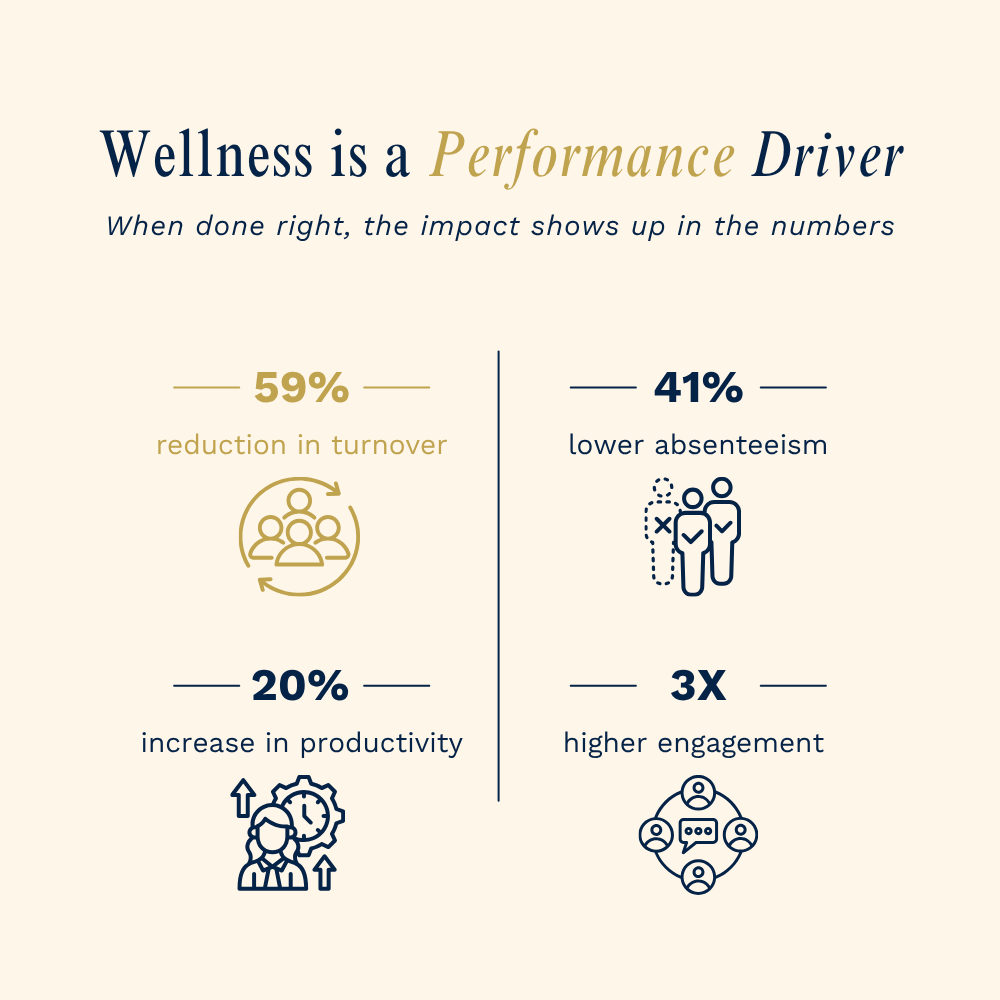
When employees are stretched thin, disconnected, or unsupported, it shows up everywhere: productivity drops, engagement declines, and turnover increases. Wellness isn’t separate from performance. It’s a driver of it.
This is where the shift becomes real.
From reactive support to proactive strategy. From isolated efforts to integrated systems.
76% of employees report experiencing burnout—reinforcing the need for consistent, structured wellness support over one-off initiatives.
source: Gallup, 2024
ONE-OFF WELLNESS DOESN’T MOVE THE NEEDLE
A single wellness event won’t fix a systemic problem.
And employees notice.
A meditation session during a high-stress quarter. A wellness day dropped into an already overloaded schedule. A speaker brought in once a year.
These moments aren’t inherently bad—but on their own, they don’t create meaningful change.
Because the issue isn’t awareness. It’s consistency.
What matters is what happens between the initiatives:
How manageable workloads are
Whether flexibility is supported in practice
If leadership models healthy behavior
When wellness shows up occasionally, it feels performative. When it shows up consistently, it builds trust.
That’s the difference.
84% of workers say workplace conditions have contributed to at least one mental health challenge—highlighting the need for sustained, structural support rather than one-time initiatives.
source: American Psychological Association, Work in America Survey, 2024
WHAT “HOLISTIC WELLNESS” ACTUALLY MEANS
Holistic wellness isn’t a program. It’s a framework.
It moves beyond one-off moments—like a single meditation session or a wellness week—and instead focuses on how people experience work as a whole. Because burnout doesn’t come from one bad day. It comes from patterns.
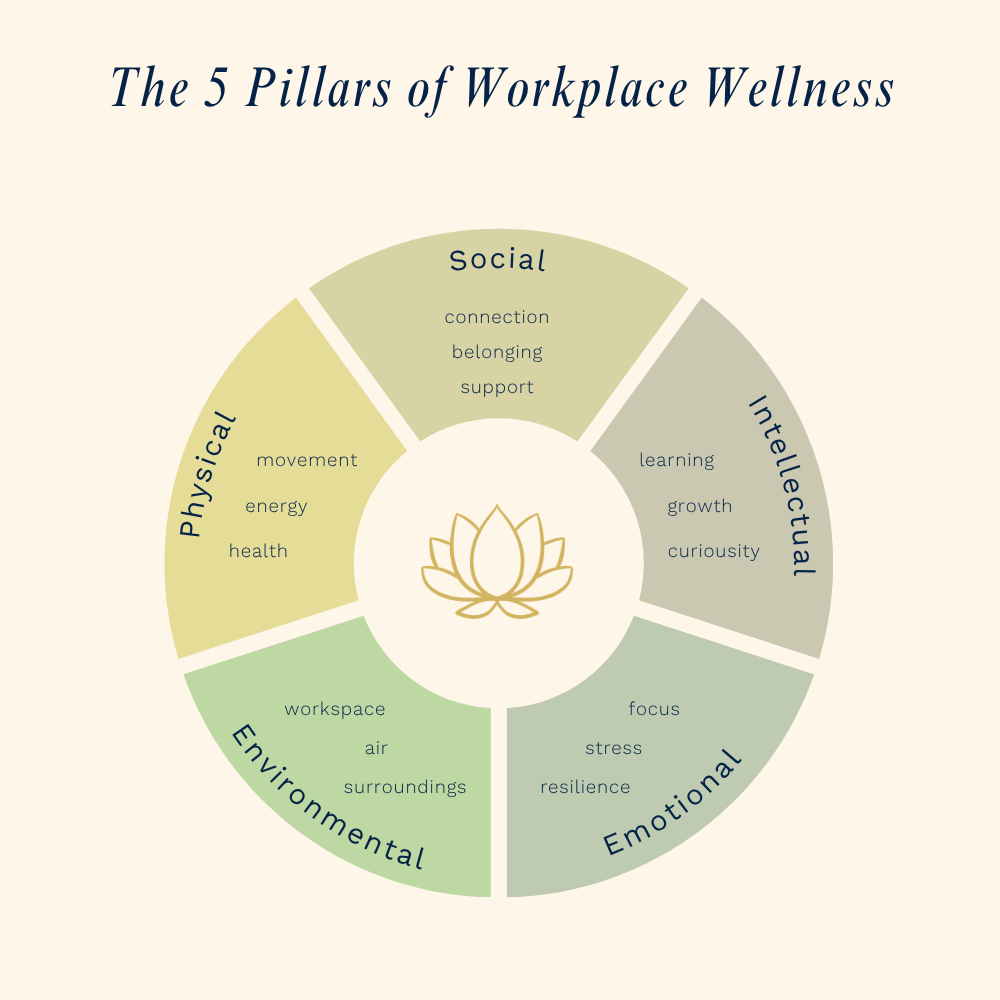
At its core, holistic wellness supports five key areas:
Mental & Emotional
Focus, stress management, and psychological safety.
→ Think: mindfulness breaks, access to resources, space to reset—not just power through.
Physical
Movement, energy, and overall health.
→ Encouraging breaks, walking meetings, or access to wellness-driven experiences.
Social
Connection, belonging, and team dynamics.
→ Where events play a critical role—creating moments that bring people together in a way that feels natural, not forced.
Environmental
The spaces people work in—both physical and digital.
→ Lighting, air quality, noise, and even the structure of the workday all contribute to how people feel.
INTELLECTUAL
Learning, growth, and curiosity.
→ Opportunities to develop, engage, and stay mentally stimulated.
Holistic wellness isn’t about adding more.
It’s about designing better systems that support people consistently—across how they work, connect, and recharge.
The Business Impact of Getting It Right
THE RETENTION CONNECTION
Wellness isn’t just a people initiative. It’s a retention strategy.
When employees feel consistently supported, they stay, engage, and perform. When they don’t, they leave—or disengage while still on payroll.
And that gap shows up fast.
Employees who feel their employer does not support their well-being are far more likely to search for a new job—highlighting the direct link between wellness and retention.
source: American Psychological Association, Work in America Survey, 2024
WHAT THIS LOOKS LIKE IN PRACTICE
Companies that approach wellness holistically don’t rely on a single initiative to carry the weight. They build it into how teams operate:
Regular, structured moments to reset
→ Built into the rhythm of work—not once a year or only when things feel off.
Think: monthly mindfulness sessions, quarterly wellness experiences, or protected “no-meeting” reset blocks.Experiences that foster real connection
→ Not forced icebreakers, but intentional moments where people actually engage.
Think: interactive team experiences, shared learning events, or small-group activations that encourage real conversation.Flexibility that reflects real life
→ Recognizing that people don’t operate at peak output 24/7.
Think: flexible scheduling, asynchronous work options, or realistic workload planning during peak periods.Leadership that models it
→ Because if leadership doesn’t participate, it doesn’t stick.
Think: leaders blocking time for wellness, participating in events, or visibly reinforcing boundaries and balance.
EVENT STRATEGY PLAYS A ROLE
This is where events move from “nice to have” to strategic lever.
Well-designed wellness experiences:
Reinforce company values in a visible, tangible way
Create shared moments that strengthen connection
Offer structured time to step away and reset
When done consistently—not just during peak seasons or budget cycles—they become part of the employee experience, not a break from it.
Because retention isn’t driven by a single moment.
It’s shaped by the accumulation of everyday experiences—and how supported people feel within them.
FINAL THOUGHTS
Holistic wellness isn’t about adding more programs.
It’s about making better decisions—consistently, and designed for real life, not just good intentions
Employees don’t experience work in isolated moments. They experience it day to day—how they’re supported, how they’re recognized, and how often they’re given space to reset, connect, and recharge.
That’s what shapes how people feel.
And ultimately, whether they stay.
The companies getting this right aren’t chasing trends or checking boxes. They’re building systems that support people in a way that’s practical, sustainable, and actually useful.
When wellness is designed into the experience—not layered on top of it—it stops feeling like an initiative.
It becomes part of how the company operates.
Turn Wellness Into a Retention Strategy
At HOST, we help companies move beyond one-off wellness moments and build structured, consistent experiences that actually support their teams.
EXPLORE WELLNESS PROGRAMS