
Company Holiday Parties: More Than Just a Year-End Celebration
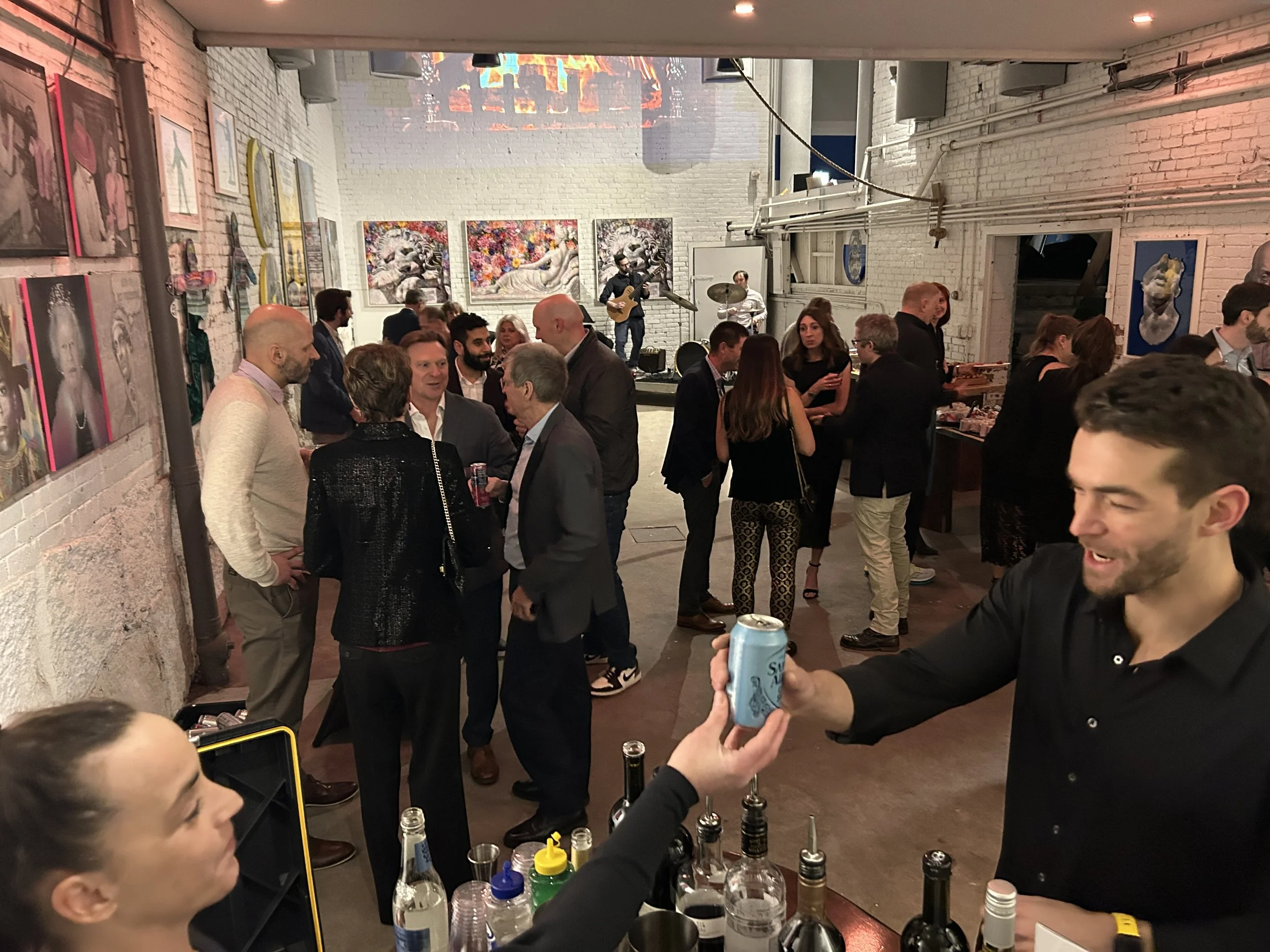
Company holiday parties aren't really about the party. At their best, they're an opportunity to recognize the year, bring people together outside their usual routines, and create a shared experience.
And today's company holiday party doesn't have to mean dinner, drinks, a DJ, and an awkward conversation with someone you haven't spoken to since last December. Corporate holiday events can be interactive tastings, creative workshops, competitive games, culinary experiences, volunteer projects, virtual celebrations, or something designed specifically around the people attending.
In this HOST blog, we're looking at why company holiday parties still matter, how the traditional celebration has evolved, and what to consider when planning an event people truly want to attend.
What is the Purpose of a Company Holiday Party?
A company holiday party gives employees an opportunity to mark the end of the year together, recognize accomplishments, and connect outside the normal rhythm of meetings, deadlines, and deliverables.
The event itself may look different from company to company, but the underlying purpose is usually some combination of recognition, connection, and shared experience.
Recognition
Teams spend most of the year moving from one deadline to the next. A year-end event creates a natural opportunity to stop and acknowledge what happened along the way—and the people who made it happen.
That recognition doesn't require an awards ceremony or a lengthy speech from leadership. Sometimes it's simply creating space for people to enjoy themselves without another task waiting at the end of the agenda.
Connection
Workplace relationships are usually built around work. Holiday events give people an opportunity to interact differently.
That can mean colleagues from different teams finally meeting in person, remote employees spending time together outside a project call, or discovering that your mild-mannered coworker becomes alarmingly competitive during trivia.
The activity isn't what creates connection by itself. It gives connection somewhere to happen.
Shared Experience
Companies don't necessarily need another party. Teams can benefit from opportunities to experience something together.
Cooking something, tasting something new, solving a challenge, creating a fragrance, competing for bragging rights, volunteering together, or simply sitting down for a great meal creates common ground that doesn't involve a spreadsheet.
And that shared experience can matter more than how elaborate the event was.
Why Do Companies Have Holiday Parties?
Companies host holiday events for different reasons: to thank employees, recognize a successful year, celebrate company milestones, bring distributed teams together, entertain clients, or simply give everyone permission to stop working for a couple of hours.
They can also reflect company culture. An organization that chooses a volunteer experience is creating a different kind of year-end moment than one hosting a formal dinner. Neither is inherently better. What matters is whether the event makes sense for the organization and the people attending.
There is also a limit to what a holiday event can accomplish.
A company party isn't a substitute for meaningful employee recognition, healthy workplace culture, fair compensation, or good leadership. No amount of passed hors d'oeuvres can carry that kind of responsibility.
What an event can do is create a dedicated moment for appreciation, celebration, and connection.
That's plenty.
Do Employees Really Want a Company Holiday Party?
Turns out, a lot of them do. But there's an asterisk.
According to ezCater's 2025 Workplace Holiday Party Trends Report, 82% of surveyed employees planned to attend their company holiday party, and 83% said holiday celebrations help them bond with coworkers and develop friendships. More than half—55%—said camaraderie and socializing were what they looked forward to most.
But attendance doesn't necessarily mean everyone is counting down the days.
The same survey found that 45% of employees feel stressed about attending workplace holiday celebrations. Food matters, too: half said the menu can influence whether they attend.
In other words, employees may want the opportunity to connect without necessarily wanting every version of the traditional office holiday party.
That's exactly why the starting point for a successful company holiday event shouldn't be What should we book?
It should be:
Who are we planning this for?
An event designed for a highly social 30-person team that works together in an office every day may look completely different from one designed for 300 employees spread across multiple locations.
Consider the personalities in the room, too. Not everyone wants to sing karaoke, participate in an icebreaker, drink alcohol, compete in front of coworkers, or spend three hours making small talk.
That doesn't mean the event has to satisfy every individual preference. It does mean planners should think about participation, accessibility, dietary needs, alcohol and non-alcohol options, timing, location, cultural considerations, and how much interaction an activity requires.
For remote and distributed teams, time zones and delivery logistics enter the equation as well.
BETWEEN US
We've planned enough corporate events to know that "fun" is not a universal event format.
One person's ideal holiday celebration is another person's mandatory-fun nightmare.
Don't start with the activity. Start with the people attending.
A Company Holiday Party Doesn’t Have to Be a “Party”
The traditional office holiday party isn't going anywhere. Great food, a good bar, music, and a room full of people who are happy to be there can still be exactly the right event.
It just isn't the only option anymore.
Taste Something
Guided wine, beer, spirits, chocolate, cheese, honey, olive oil, and other tastings turn food and drink into an interactive experience rather than simply something being served.
Hands-on experiences can take the concept even further. A whiskey blending session, for example, gives guests an opportunity to learn how different grains influence a spirit before creating their own blend.
Make Something
Creative experiences give guests something to do and, often, something to take home.
That might mean creating a custom perfume, pouring a candle, painting, cooking alongside a chef, or working through another hands-on workshop.
These formats can work particularly well when conversation and interaction are important but forced networking is not.
Play Something
Trivia, game shows, casino experiences, races, murder mysteries, and team competitions can turn a year-end gathering into something much more participatory.
The key is matching the level of competition to the audience.
There is a difference between friendly competition and discovering that half the company has been preparing for Holiday Feud since July.
Experience Something
Not every event needs to produce a finished product or a winning team.
Live entertainment, expert-led experiences, cultural programming, and hosted global experiences can give a group something new to discover together.
Give Something Back
For some organizations, the most meaningful year-end event is one that benefits someone outside the company.
Social-impact and CSR experiences can incorporate volunteering, assembling donated items, supporting community organizations, or team challenges connected to a charitable outcome.
Celebration and contribution don't have to be separate events.
Virtual Holiday Parties Aren’t the Consolation Prize
A virtual holiday event shouldn't be an in-person office party squeezed onto a screen.
The strongest virtual experiences are designed specifically for people participating from different locations. They give guests a reason to interact, establish a clear pace, and make it easy to participate without requiring everyone to spend another hour passively watching a presentation.
Professional hosting matters. So does the length of the session.
Delivered kits can add a physical component to tastings, culinary events, creative workshops, and other hands-on experiences. When kits are involved, though, the planning timeline changes. Registration deadlines, address collection, fulfillment, shipping, delivery issues, and international restrictions can all happen well before anyone clicks the event link.
For distributed teams, that logistics work is part of the guest experience—even though guests should barely notice it.
Done well, virtual isn't the backup plan.
It's simply a different event format.
Employee Holiday Parties and Client Holiday Events Aren’t the Same Thing
Both may happen during the same season, but they’re usually being asked to accomplish different things.
There can certainly be overlap. An interactive tasting might work beautifully for employees or clients.
The difference is the planning lens.
An employee event should feel appropriate for the people and culture inside the organization. A client event also needs to consider the relationship the company wants to create with its guests.
Starting with the objective helps determine everything that follows—from the experience and invitation to the venue, gifting, registration, and follow-up.
How to Plan a Company Holiday Party People Want to Attend
The easiest way to make holiday event planning complicated is to start shopping for activities before answering the bigger questions.
Instead, work in this order.
1. Start With the People
Who is attending?
Consider group size, location, working relationships, accessibility requirements, dietary restrictions, and how well attendees know one another.
A 20-person leadership team, 150-person company celebration, and 500-person client event should not automatically receive the same recommendation with different quantities.
2. Decide What the Event Needs to Accomplish
Are you celebrating? Thanking employees? Entertaining clients? Bringing remote colleagues together? Encouraging interaction between teams? Giving back?
Choose the objective before the entertainment.
3. Choose the Right Format
In-person isn't automatically better than virtual, and virtual isn't automatically easier.
Think about where people are located, whether travel makes sense, how much time you have, and what experience will work naturally in that format.
For companies with multiple offices or distributed teams, the answer may involve more than one event.
4. Establish the Budget
Know whether you're working with an overall event budget or a per-person target—and what that budget needs to include.
Venue, food and beverage, entertainment, staffing, rentals, transportation, registration, shipping, taxes, service fees, and gratuities can all affect the final number.
The "$75-per-person activity" can look considerably different once the entire event is built around it.
5. Then Choose the Experience
Now you can ask the fun question.
Would this group rather taste, make, play, compete, learn, travel, volunteer, eat, drink—or some combination?
At this point, you're choosing an experience against actual criteria instead of selecting something because somebody found it on Instagram.
6. Plan for Inclusion and Accessibility
Consider non-alcoholic options alongside alcoholic ones. Ask about dietary restrictions. Understand the physical requirements of an activity or venue.
For virtual events, consider time zones, technology, shipping destinations, and whether everyone can participate equally.
Inclusivity doesn't need to become a separate theme for the event. It should simply be part of good planning.
7. Work Backward From the Event Date
December 12 may be the date on the invitation.
It isn't necessarily your deadline.
Venues, high-demand entertainers, custom experiences, registration, branded materials, and shipped event kits can require decisions weeks—or months—earlier. Q4 also compresses a lot of corporate events into a relatively small number of desirable dates.
BETWEEN US
The more moving parts involved, the more valuable it becomes to build the timeline backward from the guest experience.
What Kind of Holiday Event Fits Your Group?
Once you've worked through the audience, objective, format, budget, accessibility, and timeline, you're finally ready to narrow down the experience.
And this is where the earlier question—Who are we planning this for?—comes back into play.
There isn't one correct corporate holiday event. The better question is which type of experience fits what you're trying to accomplish.
Use this as a starting point, not a rulebook. A great event can easily accomplish more than one objective.
Make the Event Fit the People
The company holiday party has changed because the workplace has changed.
Teams may be together every day, scattered across the country, spread around the world, or somewhere in between. Some companies want a big year-end celebration. Others want an hour together doing something completely unrelated to work. Some want to thank clients. Others want to give back.
None of those approaches is automatically the right one.
The best company holiday event isn't necessarily the biggest, fanciest, or most expensive. It's the one that makes sense for the people you're bringing together and the reason you're bringing them together.
And if everyone leaves with something to talk about besides work on Monday, we'd call that a pretty solid bonus.
Ready to Make This Year's Holiday Event Fit Your People?
HOST Events helps corporate teams plan virtual and in-person holiday experiences around the audience, objective, budget, and logistics—not a one-size-fits-all party package.
Frequently Asked Questions About Company Holiday Parties
-
A company holiday party creates a dedicated opportunity to recognize the year, show appreciation, and bring employees or clients together outside their usual interactions. Depending on the organization, the event may focus on celebration, connection, client appreciation, social impact, or simply giving people time to enjoy a shared experience.
-
Companies host holiday parties for different reasons, including thanking employees or clients, celebrating accomplishments, bringing distributed teams together, and creating opportunities to connect outside the normal workday. The event works best when its purpose and format reflect the people attending rather than following a standard holiday-party formula.
-
Alternatives to a traditional dinner or cocktail party include interactive tastings, culinary experiences, creative workshops, fragrance-making, games and competitions, social-impact activities, cultural experiences, wellness programming, and professionally hosted virtual events. The right alternative depends on the audience, objective, budget, and event format.
-
As a rule, HOST Events recommends beginning the planning process no later than two months before the event date. Planning time can vary depending on the size and complexity of the event. Venue availability, entertainment, custom experiences, registration, branded materials, vendor coordination, and high-demand Q4 dates can all affect the timeline.
Events involving shipped kits or significant customization may require additional lead time because registration, fulfillment, and delivery need to happen well before the event itself.
-
Yes. Remote employees can participate in holiday events designed specifically for virtual audiences, including tastings, culinary experiences, games, workshops, wellness sessions, and other interactive programming. Virtual events should account for participation, pacing, technology, time zones, registration, and kit delivery where applicable rather than trying to recreate an in-person office party on screen.