
Event Friction Is Expensive: How Poor Execution Impacts Budget, Attendance, and Brand Perception
with thoughts from Olive Pique, HOST’s resident event expert and mascot
In an environment of tightened budgets and heightened scrutiny around event spend, execution discipline is no longer optional. Every approval is examined. Every delay carries immediate financial impact.
Friction in event execution rarely appears as a dramatic failure. It shows up quietly — in delayed approvals, compressed vendor timelines, incomplete registration systems, unclear guest communication, or last-minute adjustments.
Individually manageable. Collectively expensive.
When milestones slip, vendor holds expire. Rush fees increase. Internal teams shift from strategic planning to reactive coordination. Margin erodes.
This applies across both in-person and virtual experiences.
For client-facing events — from in-person programs to curated virtual sessions — friction in the guest journey reduces attendance and erodes brand confidence. For internal events, rushed or unclear execution diminishes engagement and credibility.
In this HOST Blog, we’re examining where friction hides, what it truly costs, and how structured systems protect margin, participation, and reputation.

The only bottlenecks event attendees experience should be at the bar
Where Friction Hides
Friction rarely begins on event day. It starts earlier — in planning timelines, vendor coordination, registration architecture, and communication sequencing.
Most execution issues are not caused by a single failure. They are the result of compressed decisions, unclear ownership, or systems that were never fully structured. The impact often becomes visible only when the timeline tightens.
Example: Timeline Compression and FINANCIAL IMPACT
In one client-facing conference activation, internal approval delays compressed the planning timeline by several weeks.
Vendor holds expired. Specialty rentals required expedited sourcing. Creative production moved into rush windows.
On a $150,000 program, the compressed timeline resulted in approximately $10,000 in additional rush fees, accelerated production costs, and expanded labor hours — a 6–7% increase tied directly to delayed decision-making.
The financial impact extended beyond production.
Compressed lead times shortened the invitation window. With out-of-state guests being targeted, the reduced notice limited realistic attendance planning. Registration numbers underperformed projections — not due to lack of interest, but insufficient runway.
The friction was not dramatic. It was incremental.
Delayed approvals reduced vendor leverage, increased costs, and constrained participation — directly affecting both margin and return.
For subsequent activations, milestone approvals were formalized, vendor commitment windows were locked earlier, and invitation timelines were protected.
Budget variability stabilized. Registration improved. Planning regained strategic control.
Example: Registration Friction and attendance impact
In a multi-year annual expo engagement, pre-event registration initially relied on limited outreach and unstructured communication.
When HOST assumed responsibility for registration management and communication sequencing, the system changed — not the audience.
Email outreach was structured. Messaging cadence was defined. Registration confirmation and reminder touchpoints were standardized. Calendar integration and clarity of event details were prioritized. The result was measurable.
Pre-event registrations increased from 65 to over 200.
Total event attendance rose from under 200 in the first year to nearly 700 the following year.
The audience did not triple overnight. The infrastructure improved.
Registration is often treated as administrative. In reality, it is performance architecture. When communication is sequenced intentionally, and the guest journey is frictionless, participation increases.
For virtual events, this means clear confirmation, calendar holds, and platform access clarity.
For in-person programs, it means defined outreach, timely reminders, and realistic planning windows.
Attendance is not accidental. It is engineered through systems.
Example: Guest Journey Friction and On-Site Flow
Execution friction often becomes visible at arrival.
For the same annual expo, on-site flow was intentionally engineered.
Check-in was streamlined using pre-populated registration forms across multiple tablets, each staffed with a dedicated team member. Bottlenecks were reduced. Arrival confidence increased.
Customized expo passports were developed with a full-color map, highlighted areas of interest, and a numbered exhibitor list. Incentivized passport-stamping checkpoints increased exhibitor interaction while guiding guest movement organically through the space.
Communication was centralized. A strategically sequenced jumbotron slide loop reinforced the agenda, keynote timelines, and key information throughout the event. A high-energy DJ/Emcee maintained pacing and delivered coordinated announcements.
The venue was hosting a second event simultaneously — a first for this expo. Custom exterior and interior directional signage eliminated confusion and prevented cross-event traffic friction.
For exhibitors, loading zone maps, staggered arrival assignments, and parking instructions were distributed in advance. A separate exhibitor registration track increased clarity and return interest. Of 200 exhibitor tables, only two were vacant due to last-minute emergencies — and a structured waitlist allowed immediate replacement.
Execution did not feel chaotic. It felt intentional.
Guest flow influences perception. Perception influences credibility.
The Infrastructure Shift
The common thread across these examples is not creativity. It is structure.
Friction does not emerge from lack of effort. It emerges from lack of systems.
High-performing organizations treat event execution — virtual and in-person — as operational architecture. Planning timelines are defined early. Vendor commitment windows are protected. Registration flows are streamlined. Communication cadence is sequenced. On-site movement is mapped. Exhibitor logistics are structured. Follow-through is planned before the event begins.
This discipline protects more than logistics.
It protects margin.
It protects attendance.
It protects credibility.
Reactive execution is expensive.
Systemized execution reduces variability.
It stabilizes cost. It increases predictability. It improves return.
Events are evaluated by what guests see.
Performance is determined by what guests never have to notice.
Friction is expensive. But it is preventable.
✍️ A Note from Amy
I am deeply motivated by removing friction.
Not because I love systems for the sake of systems — but because events should feel seamless. When execution is smooth, people can focus on what actually matters: connection.
That belief drives how I lead HOST. Our clients are balancing revenue targets, internal morale, stakeholder scrutiny, and tight timelines. The last thing they need is unnecessary complexity layered on top of an already demanding process.
When planning feels chaotic, it distracts from purpose. When the guest journey is unclear, it distracts from engagement. When execution is rushed, it distracts from relationship-building.
Streamlining is not about control. It’s about clarity. It’s about creating an environment — virtual or in-person — where teams can show up fully, prospects feel welcomed, and clients feel valued. Where the focus stays on fostering connection and igniting engagement from end to end.
Let’s figure this out, together.
— Amy O’Neil
Owner, HOST Events | ONAR Event Services
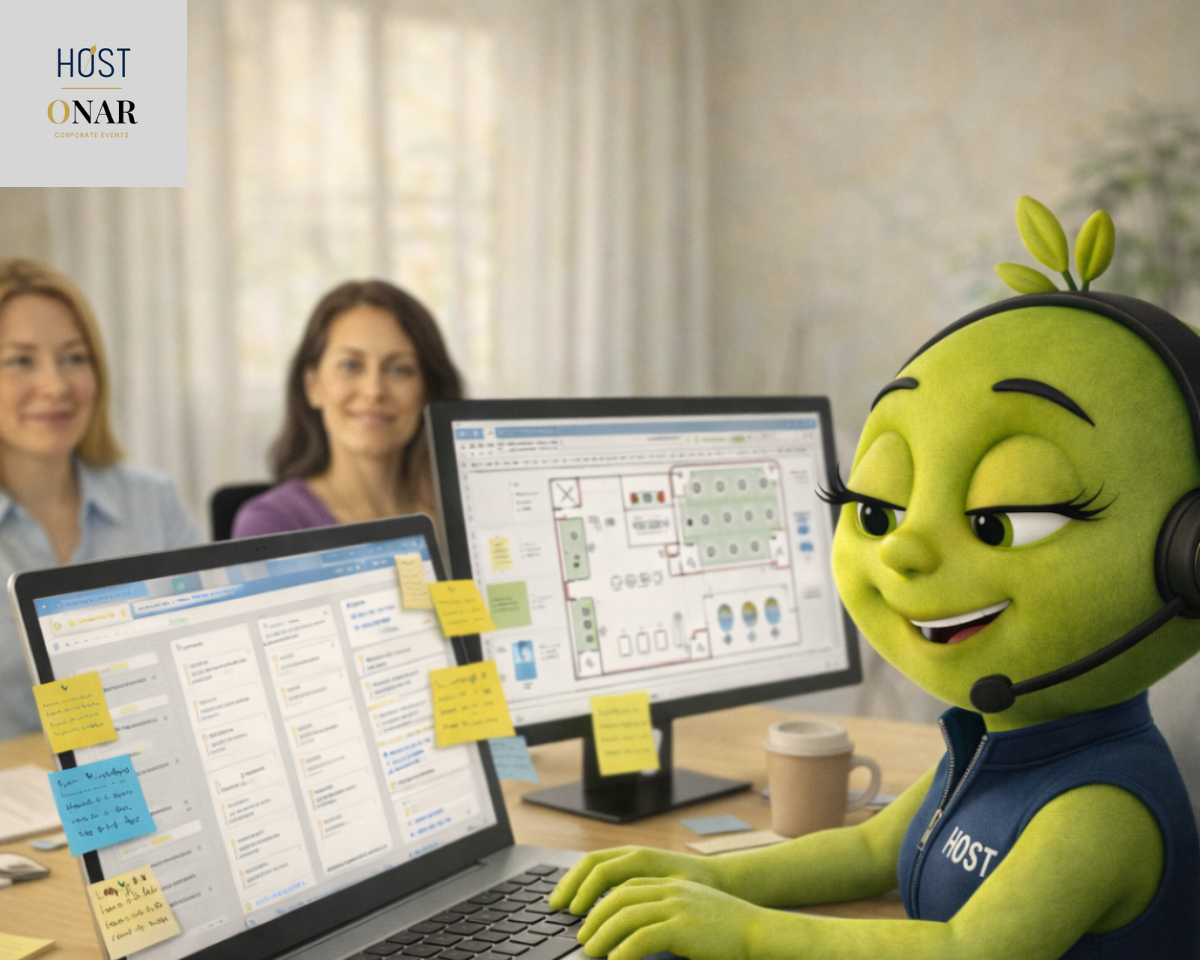
Olive Pique, HOST Events digital mascot and virtual assistant
🫒 Olive Has Thoughts
Friction is a signal.
When systems are unclear, humans compensate. Compensation requires effort. Effort reduces participation.
Streamlined inputs produce stronger outputs.
In both virtual and in-person environments, structure increases stability. Stability increases engagement.
Efficiency is not cold. It is considerate.
— Olive Pique, HOST mascot + engagement-pattern observer
Engineer the Experience. Protect the Return.
Safeguard your budget, attendance, and brand credibility from start to finish.
Make HOST your event agency partner to streamline virtual and in-person experiences.